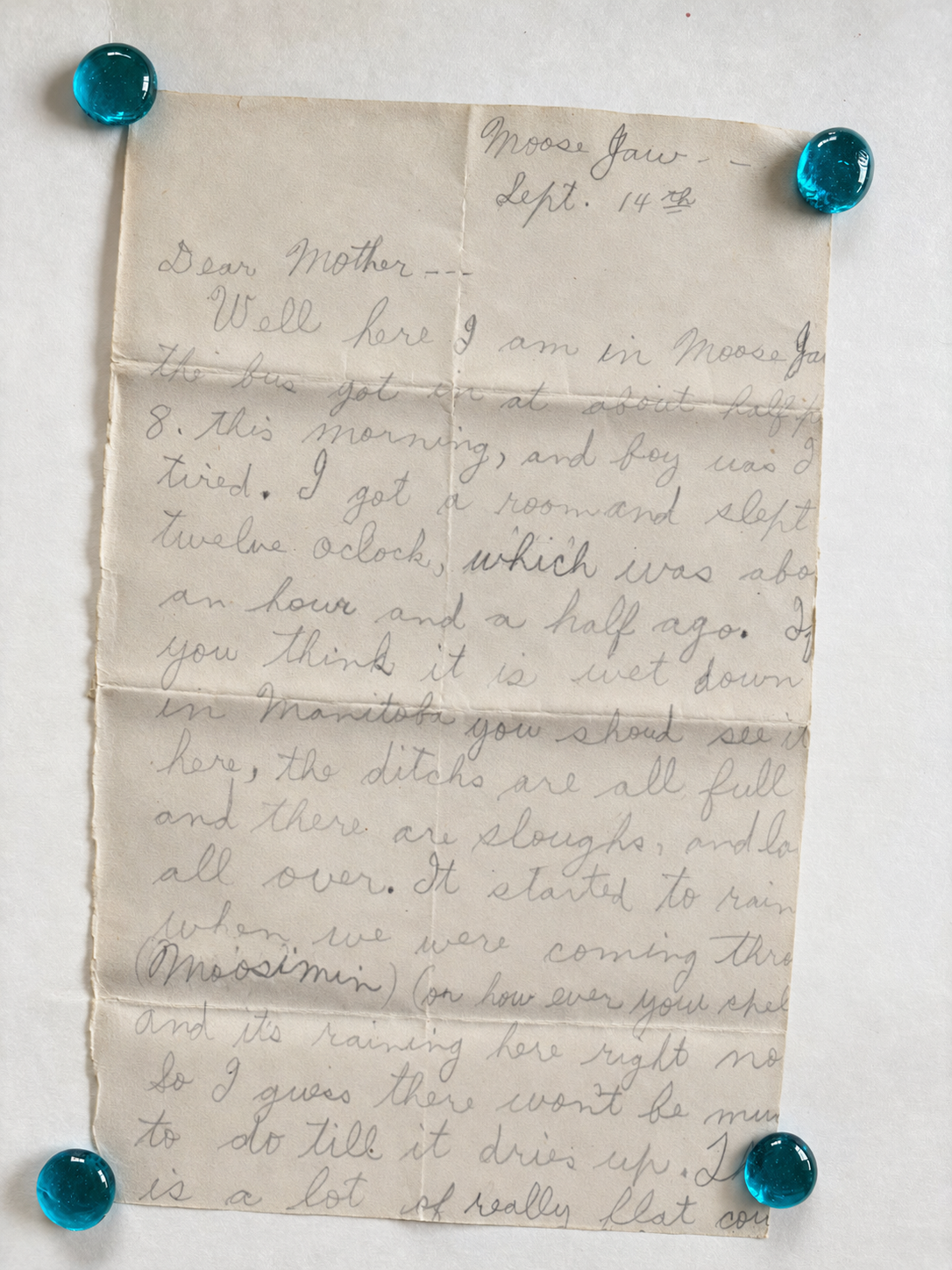
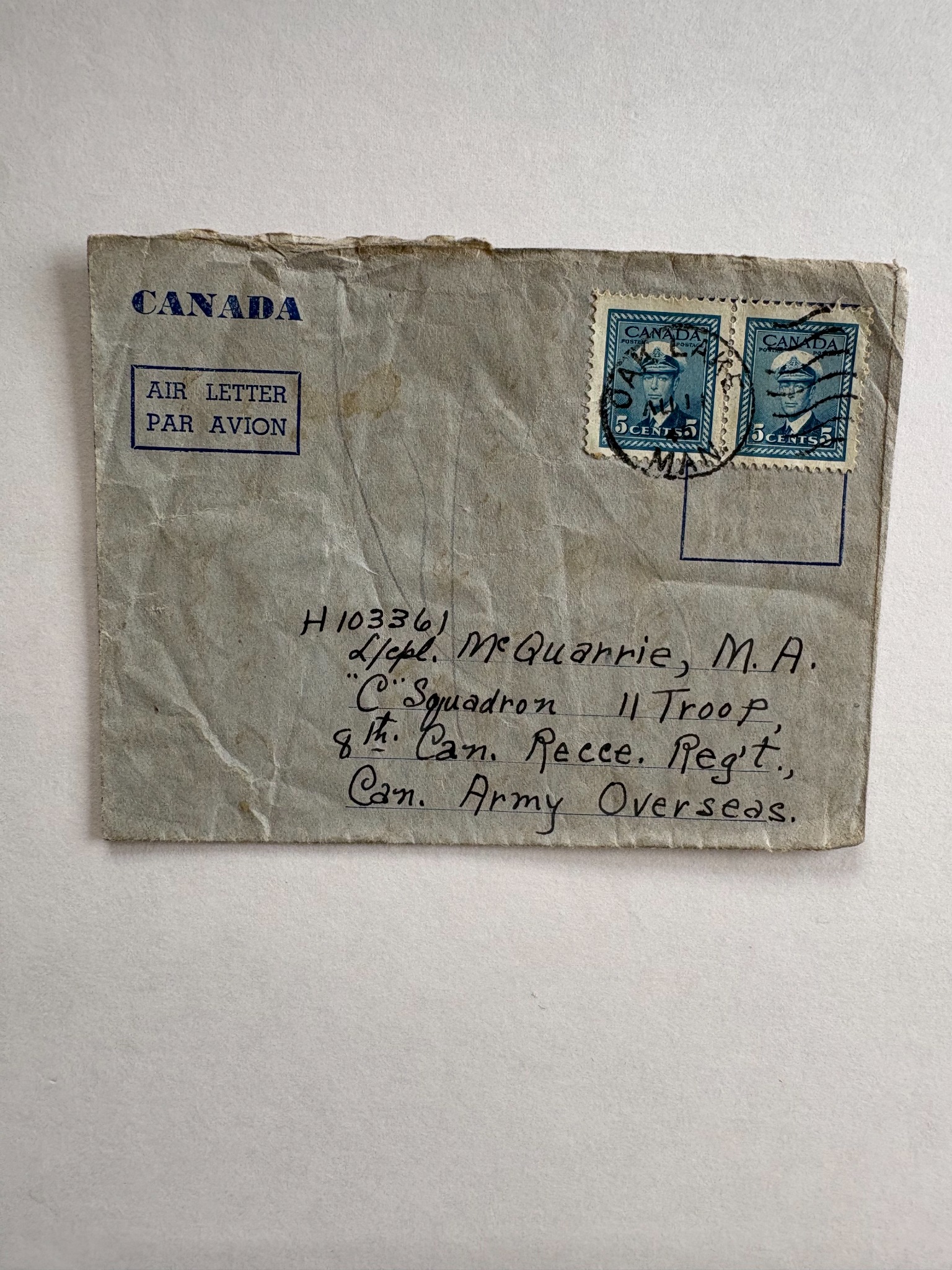
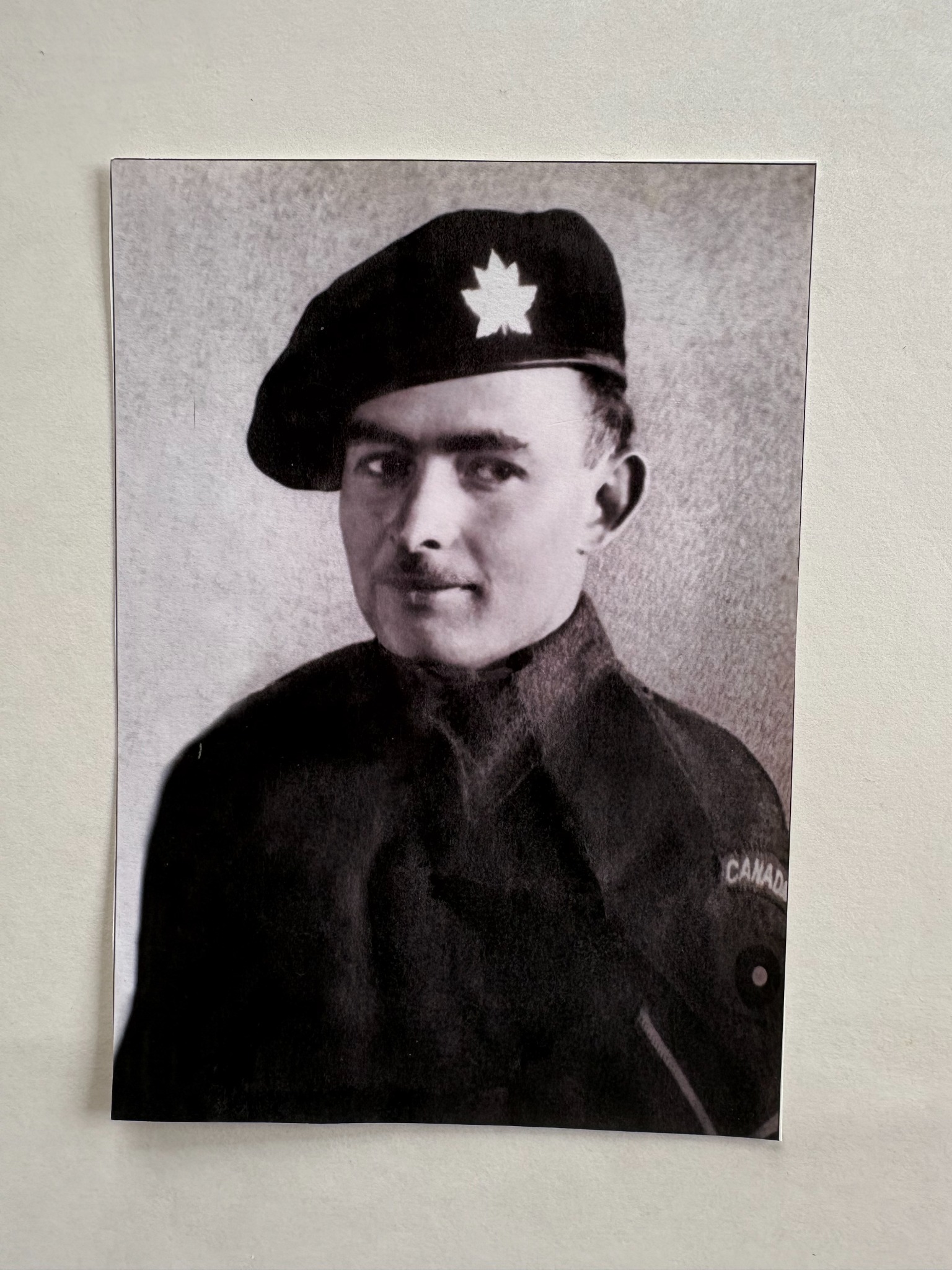
The letters carry a life across distance: training, friendship, homesickness, humour, and the ordinary details that survive history. Written between 1942 and 1945, they follow Murray from Western Canada to England and across Northwest Europe.
Formed near Aldershot in southern England in 1941, 8 Recce spent its first three years training and serving in coastal defence. The regiment landed in Normandy on July 6, 1944, and went on to take part in the advance through France and Belgium, the Battle of the Scheldt, the liberation of the Netherlands, and the final fighting in Germany.
Its work was to travel ahead of the main body of the division: locating enemy units, assessing roads and bridges, and finding routes forward. The role demanded speed, judgment, and an unusual willingness to move into uncertainty.
Continue with the regimental history+
Formation
8 Recce
The regiment had its roots in the 14th Canadian Light Horse, a militia unit headquartered in Swift Current, Saskatchewan. It was designated a mechanized unit in 1937 and renamed the 14th Canadian Hussars in 1940. Its members joined other reconnaissance personnel in England to form 8 Recce.
In action
Northwest Europe
8 Recce helped spearhead the liberation of Dieppe and Antwerp, advanced along the West Scheldt, and entered many Dutch towns ahead of the main Canadian force. Its final major engagements were Groningen and Oldenburg in April and May 1945.
Remembered
The record
During the war, 79 men were killed outright in action while serving with 8 Recce, and a further 27 died of wounds. Their battle honours include Caen, Falaise, the Seine, the Scheldt, Groningen, Oldenburg, and Northwest Europe, 1944–1945.
Adapted from the introduction to the family’s original PDF edition.